Hozugawa River boat ride: the complete guide
The Hozugawa Kudari is a roughly 100-minute ride in a flat-bottomed wooden boat, rowed and poled by three to five boatmen down 16 km of gorge from Kameoka to Arashiyama in Kyoto. It runs year round apart from the New Year break, it is not whitewater, and most visitors book it as part of a day that also includes the Sagano Romantic Train — because the awkward part is not the boat, it is the transfer at each end.
I grew up ten minutes from the boarding pier in Kameoka and spent four seasons working on that bank. In all that time almost nobody asked me about the river. They asked how much of their day it was going to cost them, and whether that was a fair trade. This is my answer to both, with the parts nobody puts on a poster.
What the boat is, and who is steering it
A Hozugawa boat is a flat-bottomed wooden hull with bench seating and no engine. Three to five boatmen work each one, some on bamboo poles at the bow, one on the stern oar, swapping roles as the water changes under them. That crew is the whole safety system and the whole entertainment. They talk the entire way down — the named rocks, the birds, what the river did in a bad year — and unless a guide is travelling with your group, they are talking in Japanese. Around 300,000 people ride it a year, so the boats load briskly and the seating is shared.
The practical shape of it, which matters more than most people expect: there is no toilet on board, only in the waiting area at the pier, and you are committed for roughly an hour and a half once you push off. Food and drink are allowed, so a bento is fine as long as you are not crowding the person beside you. Sun umbrellas are not permitted. Anyone under 80 cm tall cannot board at all, even carried, because the life jackets do not fit them. A wheelchair user can board with a companion; the folded chair is stowed and may get wet. I go through the rest of it on what to expect on the boat and how the boats are seated.
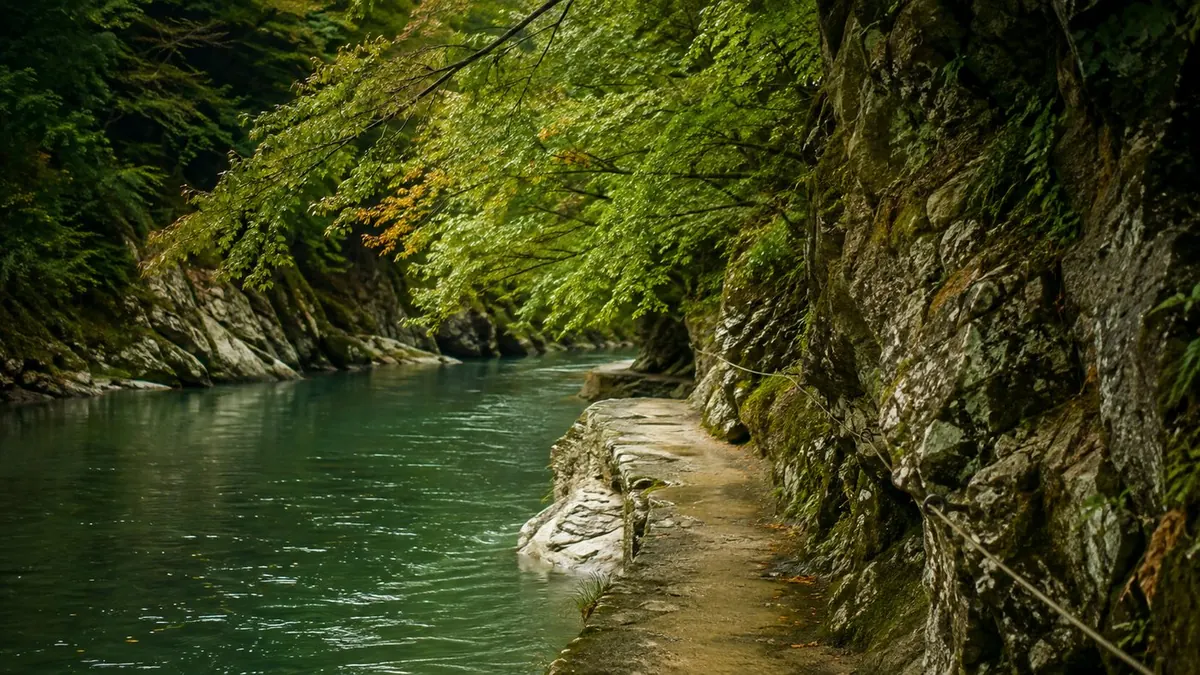
The channel you are floating down was cut on purpose
People treat this stretch as scenery. It is closer to infrastructure. Timber was floated down the Hozu towards the capital from about the 8th century, and in the early 1600s the merchant Suminokura Ryōi widened and cleared the channel so rice and cargo boats could get through to Osaka. The run you are paying for is a working freight route that stopped being needed.
Look at the bank rather than the water and you will see the tow paths, cut into the rock at roughly waist height above the river. Crews walked those with ropes over their shoulders, hauling the empty boats back upstream against the current, over and over. It is the single most interesting thing on the trip and hardly anyone photographs it.
How the 100 minutes actually feels
About 100 minutes is the honest average. When the water is high and fast the same 16 km can go by in roughly 60 minutes, and the boat feels like a different product. When the water is low it stretches to about 110 minutes, with far more poling and a lot more work for the crew. You cannot pick which one you get. It depends on the week’s rain.
It is also not 100 minutes of rapids. Most of the run is deep, green, slow water where nothing happens except the commentary and the gorge walls going past. Then a rapid arrives, the boat drops and skews, someone in the front two rows takes a faceful of the Hozu, and thirty seconds later it is quiet again. That rhythm is either the charm or the disappointment, depending on what you came expecting. If you want the water rather than the view, the raft down the same gorge is a completely different day out. A light raincoat covers the splash on the traditional boat; see do you get wet and what to wear. Winter boats run under a clear canopy, which keeps the wind off and not much else, so dress for the temperature.
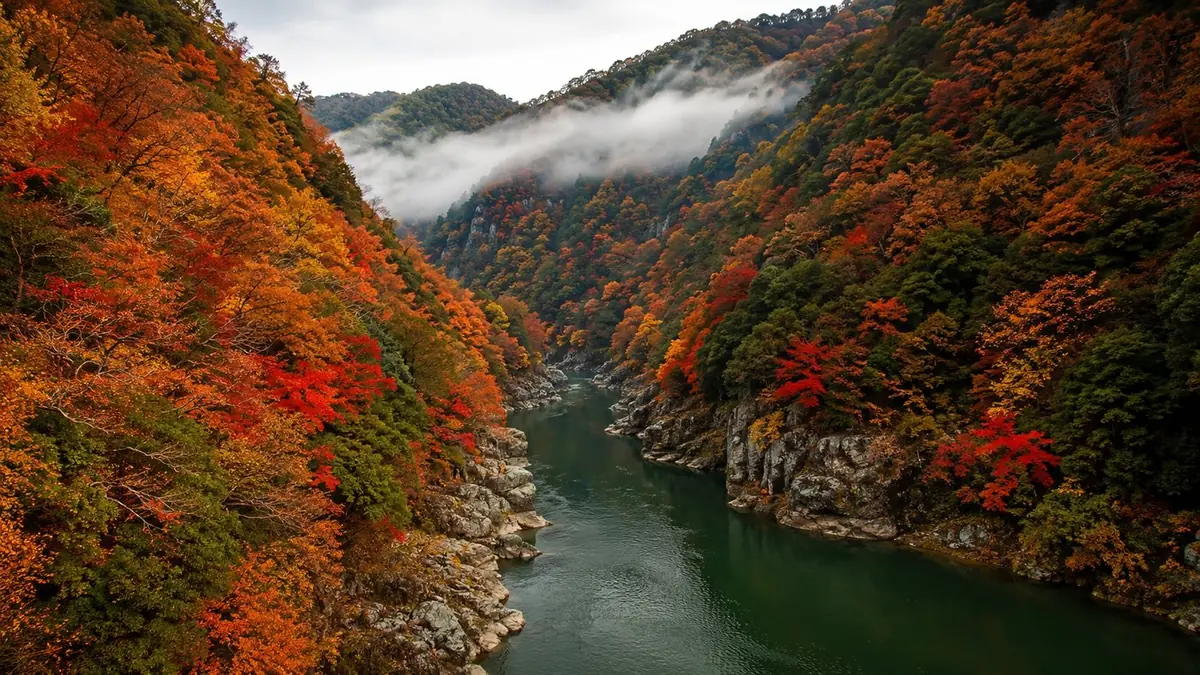
Why the Sagano train is always sold with it
The Sagano Romantic Train runs the same gorge in the opposite direction, Saga up to Kameoka. That is the whole reason the two are bundled. The train carries you to the top of the valley, the boat brings you back down it, and you see one landscape from two angles without solving a transfer in between. Sold separately they are two logistics problems. Sold together they are an itinerary. Which packages pair them, and how they differ, is on boat and train tours.
The objection: it eats your day
It does. I am not going to argue with that. Count it honestly: JR Kyoto to JR Kameoka is ¥410 and about 20 to 30 minutes, then roughly a 10-minute walk to the pier. The ticket at the counter is ¥6,000 for an adult. The ride is about 100 minutes and lands you 16 km downstream, from where it is a 15 to 20 minute walk to JR Saga-Arashiyama Station. Half a day is gone before you have eaten anything, and that is on a day with no queue and no weather.
So here is my verdict. If Arashiyama was already on your list, the boat is the best possible way to arrive there, and a package like the flagship day removes the two transfers that make it painful. If you have two days in Kyoto and a long list, skip it — you will spend the afternoon feeling behind. And if you are based in Osaka, do not try to improvise this with timetables. Take a door-to-door day and pay for the logistics. I have laid the whole argument out on is it worth it, the sums on the cost page, and every package that includes the ride on all tours.
Ready to book?
The package I point most people at is the Arashiyama day with the train, the boat and an onsen stop at the end — the boat ticket is included and someone else solves the Kameoka transfer. If you want the numbers first, read what it actually costs, or compare every option on all tours.
Frequently asked questions
How long is the Hozugawa River boat ride?
About 100 minutes in normal conditions. High, fast water can cut it to roughly 60 minutes; low water stretches it to about 110. More detail on how long the ride takes.
Where does the Hozugawa boat ride start and finish?
It starts at the boarding pier in Kameoka and finishes at the Arashiyama landing, 16 km downstream. From the landing it is a 15–20 minute walk to JR Saga-Arashiyama Station. Full directions on how to get there.
Do I need to book the Hozugawa boat ride in advance?
Not always — same-day tickets are sold at the pier counter. But Golden Week and the November foliage season do sell out, and groups of ten or more have to phone ahead. See tickets and booking.